



Share


Search

result
Onyinye Iweala, MD, PhD, FAAAAI, is Making Breakthrough Discoveries in Alpha-Gal Syndrome and Mast Cell Disorders
Onyinye Iweala, MD, PhD, FAAAAI, is Making Breakthrough Discoveries in Alpha-Gal Syndrome and Mast Cell Disorders
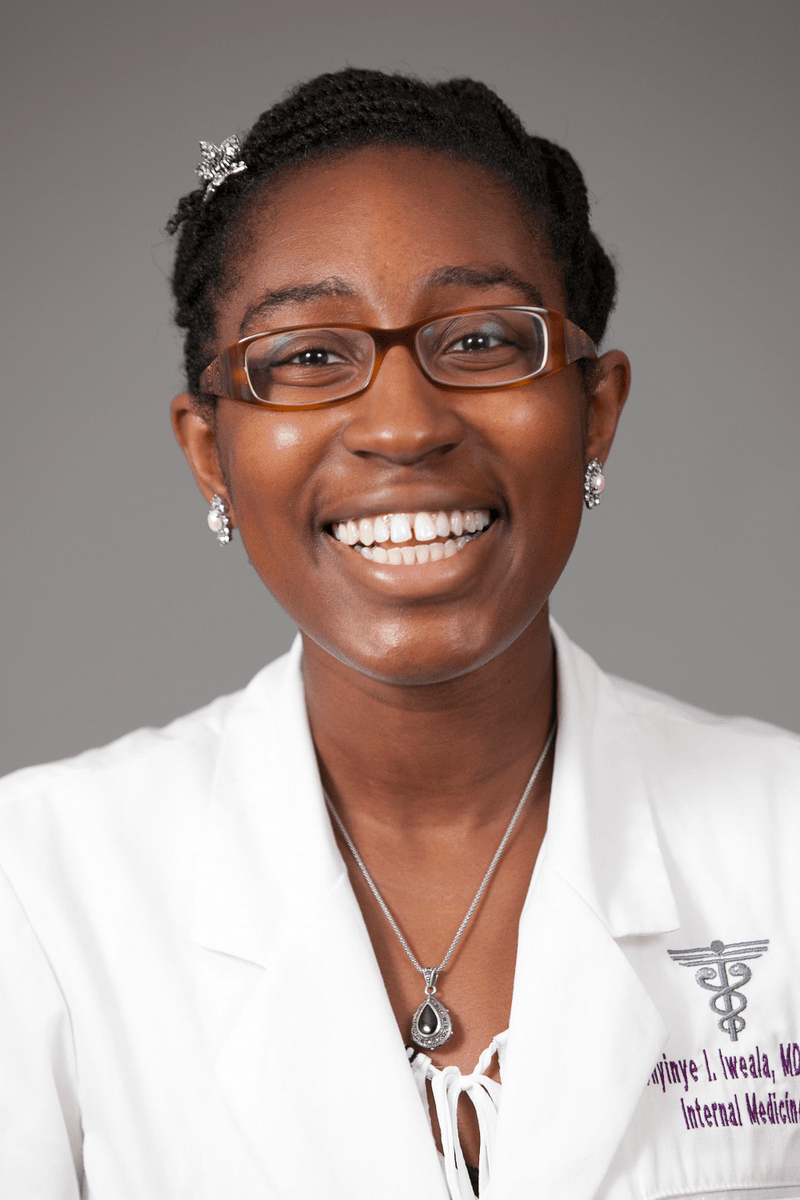
Onyinye Iweala, MD, PhD, FAAAAI
In the span of just over five years, Onyinye Iweala, MD, PhD, FAAAAI, has made multiple discoveries in alpha-gal syndrome (AGS) and mast cell disorders, publishing eight original research papers and seven invited reviews. She is currently an Assistant Professor at the University of North Carolina (UNC)-Chapel Hill and Director of the Allergy Mast Cell Disorders Program.
“My current passion and primary long-term goal is to understand the immunopathogenesis behind unusual causes of anaphylaxis, including the tick bite-associated, delayed allergic reactions to mammalian meat encompassed within AGS,” she said.
That passion helped her recieve an AAAAI Foundation Faculty Development Award in 2020 for her project, “Glycolipids and Invariant Natural Killer T Cells in Alpha-gal Syndrome.” That same year she also received a K08 Career Development Award from NIH/NIAID.
Her research work in this space began during her postdoc with Scott P. Commins, MD, PhD, in 2018. As she worked on expanding her research and further establishing her lab in 2020, COVID-19 hit. “COVID-19 had a big impact on my research,” she explained. “I was unable to travel to learn techniques from an essential collaborator, which delayed aspects of my project for two years. I was also unable to recruit as many volunteers with alpha-gal syndrome as I had anticipated, which slowed down my research significantly.”
It also impacted how she ran her lab, including her ability to offer competitive salaries to research associates and technicians. “I was very grateful for the AAAAI Foundation Award funding at this period in my career. Because of the flexibility we had on how to spend funds, I was able to recruit a new research associate and clinical research nurse coordinator and pay them both for two years. This was critical for me to be able to complete my research,” Dr. Iweala said.
That research confirmed that tick bites can induce AGS and identified specific immune cell populations that may play a critical role in converting a tick bite to a food-driven anaphylactic response. “To my knowledge, this was the first demonstration that mammalian glycolipid could activate allergic effector cells via surface-bound specific IgE. These results suggest unique roles for carbohydrates and glycolipids rarely described in IgE-mediated food allergy,” Dr. Iweala explained. “We also found that patients with AGS and tick bite history showed enhanced systemic type 2 (T2) immunity.”

Her lab also developed mouse models of AGS. One model, develop in conjunction with Dr. Commins, showed that intramerdal injections of tick saliva extract alone was enough to trigger an IgE response. “This model provided critical evidence to support a role for tick saliva in the generation of alpha-gal-directed immune responses,” Dr. Iweala said.
Dr. Iweala’s research interests and work extend beyond anaphylaxis. “In addition, the funding from the AAAAI Foundation allowed me to hire a research nurse coordinator to facilitate the creation of the UNC Allergy Mast Cell Disorders Program. We are now expanding our understanding of the epidemiology of mast cell disorders in the US and developing clinical tools to help improve the management of patients with mast cell disorders,” she said. This past August, she was interviewed for “Conversations from the World of Allergy,” the AAAAI’s podcast, where she discussed Mast Cell Activation Syndrome.
In the future, she plans to grow the research footprint of the Allergy Mast Cell Disorders Program. “Soon we will be serving as a clinical trial site for emerging therapeutics to treat both clonal and non-clonal mast cell disorders, and also for the development of patient reported outcomes and laboratory diagnostic tools.”
Her accomplishments would not have been possible if it wasn’t for the funding she received in 2020 and beyond. “I continue to be grateful for the significant investment that the AAAAI Foundation and AAAAI members placed in me and my research,” Dr. Iweala said. “I will work to ensure that this investment continues to produce dividends in terms of novel findings, novel research tools and improvements in the understanding and management of allergic disease.”