



Share


Search

result
Changing the Way We Understand, and Remove, Drug Allergy Labels
Changing the Way We Understand, and Remove, Drug Allergy Labels
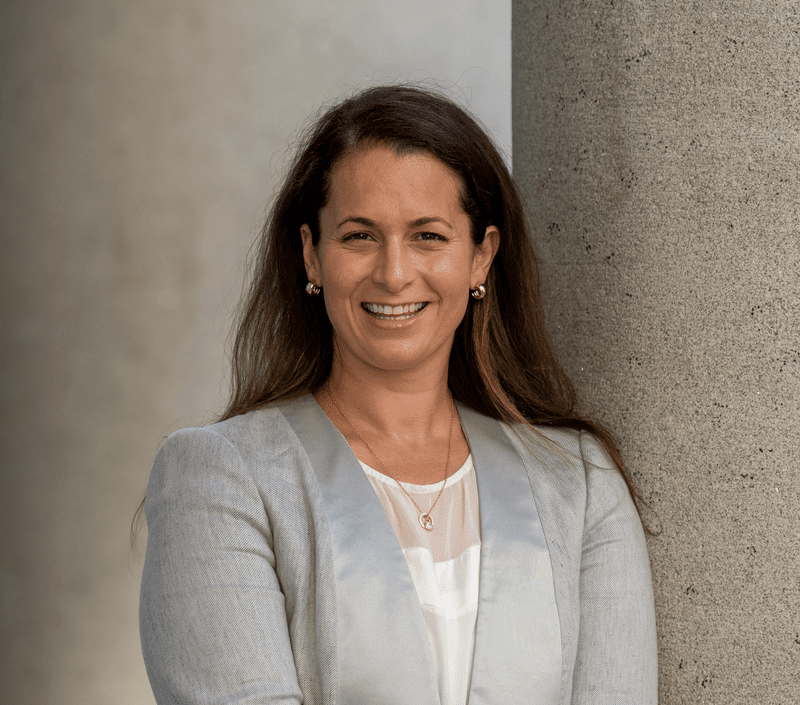
Kimberly G. Blumenthal, MD, MSc, FAAAAI
Kimberly G. Blumenthal, MD, MSc, FAAAAI, first became interested in researching drug allergies after seeing firsthand how an inaccurate drug allergy label could change a patient’s care. “It was the reason I chose allergy/immunology as a field,” she said. “During my internal medicine residency, I saw how a simple and vague penicillin allergy label impacted the infectious disease care of inpatients and knew that there was a better way.”
That observation would ultimately shape her career: understanding the consequences of inaccurate drug allergy labels—and finding practical ways to remove them when appropriate. Her early research, supported by a T32 and internal grants including the Harvard Catalyst KL2/Cmerit award, reinforced both the importance of the problem and the need for solutions that could work across diverse healthcare settings.
In 2016, Dr. Blumenthal received the AAAAI Foundation & Dr. Phillip Lieberman Faculty Development Award for her project, New Approaches to Beta-Lactam Allergy Research. It was the first AAAAI Foundation grant focused on drug allergy.
Her research helped demonstrate just how consequential a penicillin allergy label can be.
“Using large scale observational data, my research demonstrated that increased use of broad-spectrum antibiotics due to a documented penicillin allergy is associated with a 26% increased risk of Clostridioides difficile colitis, a 69% increased risk of methicillin-resistant Staphylococcus aureus, a 50% increased risk of surgical site infections and 14% increased all-cause mortality,” Dr. Blumenthal explained. “These studies motivated national and international guidelines related to penicillin allergy evaluation and de-labeling.”

Dr. Blumenthal receiving her 2016 Faculty Development Award.
Since her initial funding, Dr. Blumenthal’s work has continued to expand the evidence around drug allergy evaluation and de-labeling. She has published more than 200 academic articles and given plenary presentations at national meetings. She is internationally recognized as an expert in drug allergy management and diagnostics.
But identifying the problem is only part of the challenge. Much of her current work asks another question: How do you make de-labeling happen in everyday clinical care?
“Currently I am working with an R01 where we have been assessing penicillin allergy de-labeling using mixed quantitative and qualitative methods,” Dr. Blumenthal said. “It’s focused on improving access to penicillin allergy assessment and de-labeling in primary care by identifying multilevel barriers, developing and testing implementation strategies, and evaluating the impact of a de-labeling package across participating sites.”
This project has led to a number of findings and outcomes. “We created a validated electronic measure of de-labeling using the electronic health record so that we can measure how much de-labeling is occurring at certain sites,” she explained. “We’ve also identified racial differences in penicillin allergy de-labeling and economic associations with de-labeling prevalence in the Boston area. We’ve used patient perspectives and the health belief model to ‘map’ out how patients think about their penicillin allergy and de-labeling, such as their amenability to testing and acceptance of a negative test.”
She is also co-leading the first clinical trial on cephalosporin allergy diagnostic testing funded by the National Institute of Allergy and Infectious Diseases of the NIH alongside Past AAAAI President David A. Khan, MD, FAAAAI. “The study is being conducted across multiple U.S. sites and is designed to evaluate the diagnostic performance of cephalosporin allergy testing while improving understanding of cross-reactivity among beta-lactam antibiotics. The trial has already generated significant national and international interest because of its potential to improve the evidence base for antibiotic allergy diagnosis and patient care,” Dr. Blumenthal said.
Those aren’t the only projects gaining initiative. In 2017, Dr. Blumenthal founded the United States Drug Allergy Registry (USDAR) Consortium, which has expanded to 12 sites across the country. “The consortium supports a patient registry, collection of biological specimens through a biorepository, and studies focused on improving the understanding and diagnosis of drug allergies,” she said. “The USDAR biorepository is now based at Mayo Clinic and is growing into the largest drug allergy biorepository of its kind in the United States. The consortium aims to better characterize drug allergy phenotypes and mechanisms while creating resources that can support future translational research.”
Dr. Blumenthal noted with pride how far research in drug allergy has progressed and grown since her early career. “Since my AAAAI Foundation grant there have been a number of others awarded in the field of drug allergy, such as Cosby A. Stone, Jr., MD, MPH, FAAAAI; Santiago Alvarez-Arango, MD; and Matthew Krantz, MD. Similarly, my NIAID K award was the first NIAID-funded K in drug allergy, and now there are more K awards, and even R/U level funding in drug allergy funded by the NIAID. I am thrilled for drug allergy research and to see where it continues to go.”
Dr. Blumenthal is also bringing together national leaders to teach penicillin and other drug allergies on National Penicillin Allergy Day. “I have poured my heart into this and it’s a perfect course for anyone looking to optimize their drug allergy practice.”
Raise Awareness on National Penicillin Allergy Day,
September 28!
The implications of this work extend well beyond allergy/immunology. More than 95% of patients who have penicillin allergy in their electronic medical record can safely take penicillin after evaluation. Removing inaccurate labels can improve patient care and support the fight against antimicrobial resistance—and AAAAI members can help raise awareness. Help spread the word on National Penicillin Allergy Day, September 28!
Our Penicillin Allergy Center offers practice resources, education materials and social media resources you can use to reach out to your community to encourage penicillin allergy testing referrals. You can also help by telling Congress to pass the Penicillin Allergy Verification and Evaluation Act. It takes just minutes on AAAAI Advocate.